What is a Borewell?
A borewell is a deep, narrow well that is drilled into the ground to access water from underground aquifers. Borewells are typically constructed by drilling through various soil layers and rock formations to reach a water-bearing zone or groundwater. Borewells are commonly used in areas where there is insufficient surface water or where other sources like rivers, lakes, or ponds do not provide reliable water. These wells are widely used for agricultural, industrial, and domestic purposes.
How Borewells Work
Borewells tap into underground water reservoirs (aquifers) by drilling a hole into the ground. A borewell usually consists of a long vertical pipe that penetrates the ground, sometimes hundreds of meters deep, depending on the water table in the region. Once the borewell reaches the water source, it is equipped with a pump (usually a submersible pump) to lift the water to the surface. The borewell is often protected by a casing to prevent collapse and contamination.
Types of Borewells
- Open Borewells: These are traditional wells where water is accessed from a shallow groundwater source. These are often covered to prevent contamination but are less common today due to their low efficiency.
- Deep Borewells: These are drilled to much greater depths to access deeper aquifers. Deep borewells are widely used in areas where surface water is scarce or unavailable, especially in rural areas.
- Hand-Dug Wells vs. Drilled Borewells: Hand-dug wells are typically much shallower and labor-intensive, while drilled borewells use advanced machinery for deeper access to water sources.
What is Borewell Drilling?
Borewell drilling is the process of drilling a hole into the ground to create a borewell. This process typically requires specialized drilling equipment and machinery. The drilling process involves creating a narrow cylindrical hole, which may extend several meters or even hundreds of meters below the earth’s surface, depending on the desired depth and the type of soil and rock layers being drilled through.
Borewell Drilling Process:
- Site Selection: The first step is choosing a site where water is likely to be available. This may be based on a geological survey, historical water data, or even local knowledge.
- Drilling: A borewell rig or drilling machine is used to bore into the ground. The machine uses a rotating bit that grinds through the earth to make a hole. Water or air may be used to flush debris out of the borehole during the drilling process.
- Casing and Lining: After drilling, a casing (usually made of PVC or steel) is inserted into the borehole to prevent soil or debris from collapsing into the well. This casing also helps to protect the water from contamination.
- Installation of Pump: Once the borewell is drilled and lined, a pump (typically a submersible pump) is installed to lift water from the aquifer to the surface.
Types of Drilling Techniques
- Rotary Drilling: This is one of the most common techniques used for deep borewell drilling. It involves using a rotating drill bit that grinds through layers of earth and rock. The debris is removed by circulating water or air.
- Percussion Drilling: This method involves repeatedly striking the ground with a heavy hammer to break up the soil and rock layers. It is less common but may be used in certain conditions.
- Auger Drilling: An auger is a long spiral-shaped tool that is used for drilling through soft soils. This method is often used for shallow borewells or small-scale drilling projects.
Borewell Drilling Machines
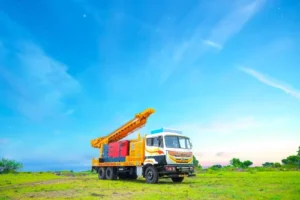
Borewell drilling machines are heavy-duty equipment designed to drill into the ground with precision. These machines are capable of drilling at various depths and can be used in a wide range of soil and rock conditions. Modern machines are typically powered by diesel or electric motors and are equipped with advanced technology to ensure efficient and accurate drilling.
Importance of Borewell Drilling
- Access to Clean Water: Borewells provide access to underground water, which is often cleaner and safer than surface water.
- Irrigation: Borewells are essential for agricultural purposes, especially in regions that depend on groundwater for irrigation.
- Rural Areas: In many rural and remote areas, borewells are a crucial source of water for both drinking and other domestic uses.
- Industrial Use: Industries also rely on borewells for their water supply needs, particularly for manufacturing, cooling systems, and other water-intensive operations.
Challenges in Borewell Drilling
- Water Table Variability: The depth at which water is found can vary significantly depending on location and time of year. In some regions, the water table can drop, making drilling more challenging.
- Cost: Borewell drilling can be expensive, especially for deep wells that require more advanced machinery and technology.
- Water Contamination: Borewells, if not properly maintained, can lead to contamination of water supplies. The integrity of the casing and pump is crucial to prevent pollutants from entering the water
Understanding Borewell Drilling: An Overview
Borewell drilling is a crucial process designed to access groundwater resources that lie beneath the Earth’s surface. This method is significant in areas where surface water is scarce or unreliable, making it an essential component of water resource management. Borewell drilling serves multiple purposes, including irrigation, drinking water supply, and groundwater exploration, thereby supporting various sectors such as agriculture, residential, and industrial usages.
The essence of borewell drilling lies in its ability to tap into aquifers, which are underground layers of water-bearing rock or sediment. By creating cylindrical holes in the ground, borewell drilling allows for the extraction of groundwater, making it invaluable for sustaining water supplies in both urban and rural areas. This practice is especially vital in regions prone to drought, where surface water sources may be diminished, fostering the need for efficient and sustainable groundwater harvesting.
There are primarily two types of borewells: shallow borewells, which usually extend to a depth of around 150 feet, and deep borewells, which can go much deeper, sometimes exceeding 1,000 feet. The type of borewell selected often depends on local geological conditions and the specific water needs of the community or agricultural outfit. The methodologies employed in borewell drilling have evolved significantly, utilizing advanced machinery and techniques to ensure precision and safety throughout the process. Techniques such as rotary drilling, percussion drilling, and air lift drilling are commonly employed, depending on the soil and rock layers encountered.
In conclusion, borewell drilling is a pivotal technique that underpins the management of water resources, catering to the growing demand for accessible and sustainable water supplies across various domains. Understanding its fundamentals helps in appreciating its role in today’s water-scarce scenarios and its contributions to environmental conservation and agricultural productivity.
Tools and Equipment for Borewell Drilling
Preparing for borewell drilling requires careful consideration of the tools and equipment to ensure efficiency and safety throughout the process. The selection of appropriate equipment is paramount, as different soil types and geological conditions can significantly influence the success of drilling operations.
One of the most critical tools in borewell drilling is the drilling rig. This mechanism is responsible for penetrating the ground and accessing groundwater sources. Depending on the depth and diameter of the borewell, various types of drilling rigs can be employed, such as rotary drilling rigs or percussion drilling rigs. Each has its own advantages that cater to specific geological conditions, ensuring effective penetration and stability during the process.
Additionally, casing pipes play a crucial role in borewell projects. These pipes are installed to prevent the collapse of the borehole and protect the water source from contamination. The choice of casing material—such as PVC, stainless steel, or galvanized iron—depends on factors like the depth of the borewell and the surrounding soil conditions. Proper installation of casing pipes is vital for maintaining water quality and structural integrity.
Furthermore, drilling fluids, such as mud or water, are essential to the drilling process. These fluids help lubricate the drilling bit, remove cuttings from the borehole, and stabilize the well. The selection of an appropriate drilling fluid is influenced by the type of soil being drilled; for instance, a higher viscosity fluid may be required for unstable or clay-rich soils. Ensuring the right balance in the composition and volume of drilling fluids directs the overall efficiency of the operation.
Other materials, such as drill bits, hoppers, and pumps, contribute to the effectiveness of borewell drilling. The drill bit design must be tailored to the specific soil type to maintain momentum during drilling and enhance performance. A synergy of high-quality equipment and proper technique is essential in achieving successful borewell drilling while ensuring safety for personnel involved.
The Step-by-Step Borewell Drilling Process
Borewell drilling is a meticulous process that requires careful planning and execution to ensure successful water extraction. The initial phase involves site selection, where one must evaluate the geographical and geological factors, ensuring that the chosen location has sufficient water supply. Apart from considering the surrounding environment, understanding the terrain’s accessibility for drilling equipment is crucial. Once a site is chosen, the next step is obtaining the necessary permissions from local authorities and landowners, as borewell drilling is often subject to regulations.
Following the approval stage, conducting soil tests becomes vital. These tests evaluate the soil’s composition, water table depth, and geological formations, providing insights into the challenges that may arise during drilling. The gathered data is instrumental in choosing the right drilling technique and equipment suited for the specific site conditions.
Once preparatory measures are in place, the main drilling process commences. Setting up the drilling rig is the first physical step, ensuring it is correctly positioned and anchored to withstand the drilling forces. This setup might include leveling the rig and aligning it accurately with the planned borehole location.
The next phase involves advancing the drill bit into the ground. This step should be meticulously monitored, as various geological formations may require adjustments to the drilling method or bit type. As drilling progresses, casing installation becomes necessary; the casing protects the well structure and prevents contamination. Proper casing installation requires careful handling to avoid damage or misalignment.
Finally, managing drilling fluid circulation is essential for cooling the drill bit and removing cuttings from the borehole. Maintaining the right density and viscosity of the drilling fluid is fundamental to avoid well collapse and ensure effective drilling operations. By adhering to these best practices and being aware of potential challenges, one can successfully navigate the borewell drilling process, ensuring both safety and efficiency throughout.
Post-Drilling Procedures and Maintenance
Once the borewell has been successfully drilled, several crucial steps should be undertaken to ensure its functionality and longevity. The initial procedure involves cleaning and developing the borewell. This process is critical, as it removes any debris, sediment, or drilling mud that may have accumulated during the drilling process. Proper development enhances water yield and quality, making it vital for efficient operation.
Following the cleaning, a comprehensive water quality test should be conducted. Testing for contaminants such as heavy metals, bacteria, and nitrates is essential to ensure that the water is safe for consumption and usage. This not only allows for prompt remedial action, if necessary, but it also establishes a baseline for future water quality assessments. Regular testing should be part of the maintenance schedule, especially if the borewell is used frequently or for agricultural purposes.
Sealing the borewell is another key procedure that cannot be overlooked. Proper sealing prevents surface water and contaminants from infiltrating the borewell, which can compromise water quality and lead to health risks. It is advisable to use high-quality materials for sealing to ensure durability and effectiveness.
To prolong the lifespan of the borewell, regular maintenance should be implemented. This includes monitoring water levels using a water level indicator or similar tools to detect any significant changes, which may indicate potential issues such as over-extraction or blockages. Furthermore, checking for leaks or obstructions periodically helps in maintaining the borewell’s operational efficiency. Engaging a professional service for annual inspections could also be beneficial and is recommended for ensuring any arising concerns are promptly addressed.
Understanding Borewell Water Location
Selecting the right location for borewells is a critical step in ensuring a successful water extraction process. The geological factors that influence water availability beneath the earth’s surface play a fundamental role in determining the viability of a borewell. Various soil types, rock formations, and groundwater levels must be assessed to ascertain the likelihood of encountering water. Knowing how to analyze these geological components can significantly increase the chances of success when drilling a borewell.
Additionally, traditional methods for identifying water presence have proven to be beneficial over time. Techniques such as divining or dowsing utilize simple tools, like a forked stick or pendulum, to locate underwater springs. Although these may seem unconventional, many practitioners attest to their effectiveness, thus warranting consideration in conjunction with modern geological surveys. Employing these time-honored techniques can provide supplementary insights into potential water sources, aiding in better decision-making for borewell placement.
Consulting local knowledge or experts in the field is another essential aspect of determining an optimal borewell site. Local residents often possess first-hand experience regarding underground water availability and historical data on past borewell projects. Engaging with hydrogeologists or groundwater specialists can further enrich the understanding of the specific conditions in the area. These experts can offer tailored advice based on comprehensive analyses of regional aquifers and other crucial factors influencing borewell success.
Thus, thorough research is imperative before proceeding with borewell drilling. By combining geological assessments, traditional methods, and local expertise, stakeholders can enhance their chances of successfully tapping into water sources, ultimately leading to sustainable water access for domestic or agricultural use.
Techniques for Water Area Assessment
Determining suitable locations for borewell drilling is vital for ensuring an adequate water supply. It involves several assessment techniques that can enhance the probability of successful water extraction. Among the most prevalent techniques are hydrogeological surveys, resistivity surveys, seismic surveys, and advanced tools such as ground-penetrating radar (GPR).
Hydrogeological surveys provide essential information about the quantity and quality of groundwater in a specific area. This technique assesses various factors such as soil composition, existing aquifers, and past well data. By analyzing these variables, hydrogeologists can predict the likelihood of finding water and its movement patterns within underground formations.
Complementing hydrogeological surveys are resistivity surveys, which measure how easily electrical current passes through underground materials. This method helps identify variations in soil and rock properties, indicating potential water-bearing formations. By evaluating the resistivity values, professionals can effectively peer into the subsurface and pinpoint the location of aquifers.
Seismic surveys leverage sound waves to understand subsurface structures. When propagated through different geological layers, sound waves reflect at boundaries, producing data on layering and composition. This technique aids in visualizing aquifer depth and understanding geological formations that may influence water availability.
Furthermore, advanced technologies like ground-penetrating radar (GPR) provide high-resolution imaging of the subsurface. GPR uses radar pulses to detect the presence of water and identify aquifer boundaries. This non-invasive method allows real-time data collection without extensive drilling, facilitating quicker and more informed decisions regarding borewell placement.
Employing these varied techniques in combination enhances the efficiency of borewell site selection. Each method contributes unique insights, allowing a more comprehensive understanding of the hydrological landscape. By utilizing hydrogeological surveys, resistivity and seismic surveys, and advanced tools like GPR, professionals can significantly improve the chances of successful water extraction. In conclusion, informed assessment techniques are crucial for successful borewell drilling, ensuring a sustainable water supply for various needs.
Using Water Level Measurement Tools
When it comes to determining the water level in borewells, utilizing appropriate measurement tools is essential for accurate data collection. Several instruments are available that cater to various preferences and budgets. Traditional methods have been widely employed for years, and they still provide reliable results in many cases.
One of the most common traditional tools is the water level indicator. This device typically consists of a probe that is submerged into the borewell. When the probe touches the water surface, it completes an electrical circuit, signaling the device to emit a visual or auditory alert. This method, while straightforward, requires manual handling and may not provide real-time data. However, its simplicity and effectiveness make it a popular choice among many borewell users.
In contrast, modern technology has introduced digital water level sensors, which offer a more sophisticated approach to water measurement. These sensors can provide continuous monitoring of water levels and often come with digital displays that indicate depth in real time. Some advanced models even connect to mobile apps, allowing users to remotely monitor water levels. This technology enhances the accuracy of readings and enables users to track changes over time, thus providing insights into water availability in the borewell.
To effectively use these tools, it is crucial to ensure the borewell is clean and free from obstructions that could interfere with measurements. Additionally, regular calibration of instruments is essential to maintain accuracy. By understanding the specific features and limitations of each tool, users can make informed decisions on which method best suits their needs.
In conclusion, the right choice of water level measurement tools can significantly impact a user’s understanding of water depth and availability in borewells. Whether opting for traditional or digital methods, accurate measurement is vital for effective water management.
Consulting Experts and Resources
When embarking on the journey to identify suitable water areas for borewells, consulting with experts is an invaluable step. Hydrogeologists and professional drillers possess specialized knowledge that can significantly enhance the likelihood of successful water sourcing. These professionals understand the geological nuances of specific regions, including water table depth, aquifer characteristics, and soil composition. Their expertise can save time and reduce costs associated with the drilling process, as they can provide invaluable insights into the best locations for borewell drilling.
Engaging with a hydrogeologist allows individuals to access data-driven assessments tailored to specific geographic conditions. These evaluations often include analyses of hydrological models and mapping of potential aquifer zones. Furthermore, reputable drillers can offer practical advice on the required drilling techniques and equipment, ensuring that the borewell construction adheres to industry standards and local regulations.
In addition to consulting with experts, leveraging online resources can further bolster your borewell research. Numerous reputable organizations and information networks provide insights into borewell water sourcing. Websites such as the National Ground Water Association (NGWA) offer educational materials, guidelines, and directories of licensed professionals. Similarly, state geological surveys often publish data on groundwater availability and quality, presenting a valuable resource for prospective borewell owners. Online forums and community platforms can also facilitate discussions with experienced borewell drillers, allowing newcomers to seek advice and share experiences.
Overall, combining the knowledge and insights gained from expert consultation with the wealth of information available online creates a robust approach to identifying potential water areas for borewells. By utilizing these resources effectively, individuals can maximize their chances of drilling successful borewells that are sustainable and efficient.
best borewell drilling machine
water well drilling contractors
borewell drilling machine price
borewell water level monitoring
best water well drilling machine
best borewell drilling company
borewell drilling services in [India]
borewell drilling machine rental
best borewell drilling machine
borewell drilling and pump installation
borewell drilling machine manufacturers
borewell drilling equipment for sale
deep water borewell installation
borewell drilling services cost
borewell pump installation cost
borewell drilling machines for sale
borewell water pump troubleshooting
affordable water drilling services
borewell drilling machine cost
how to choose borewell drilling company
borewell pump installation guide
borewell installation services near me
borewell drilling cost estimation
affordable borewell contractors
how deep is a borewell drilled
borewell water pump troubleshooting guide
borewell drilling company reviews
local borewell drilling experts
submersible pump installation near me
simple borewell drilling solutions
drilling machines for borewells
cheap borewell drilling near me
borewell drilling services for agriculture
how to clear a clogged borewell
borewell installation video tutorial
cost of borewell pump installation
borewell water level checking system
borewell cleaning equipment rental
borewell drilling cost per meter
borewell water pump repair services
how to find a good borewell contractor
borewell drilling site selection
best submersible pumps for borewells
borewell drilling for irrigation
borewell drilling machine dealers
borewell pump efficiency check
drilling machine hire for borewells
borewell maintenance and repairs
borewell drilling service cost breakdown
how to install water pump in borewell
how to fix a malfunctioning borewell pump
borewell drilling machine suppliers in [Hyd]
step-by-step borewell drilling guide
borewell drilling near [Hyderabad]
top-rated borewell installation company
local borewell cleaning services